
Sector · Electricity
Electricity
Key figures
12.6
3.4
Overview
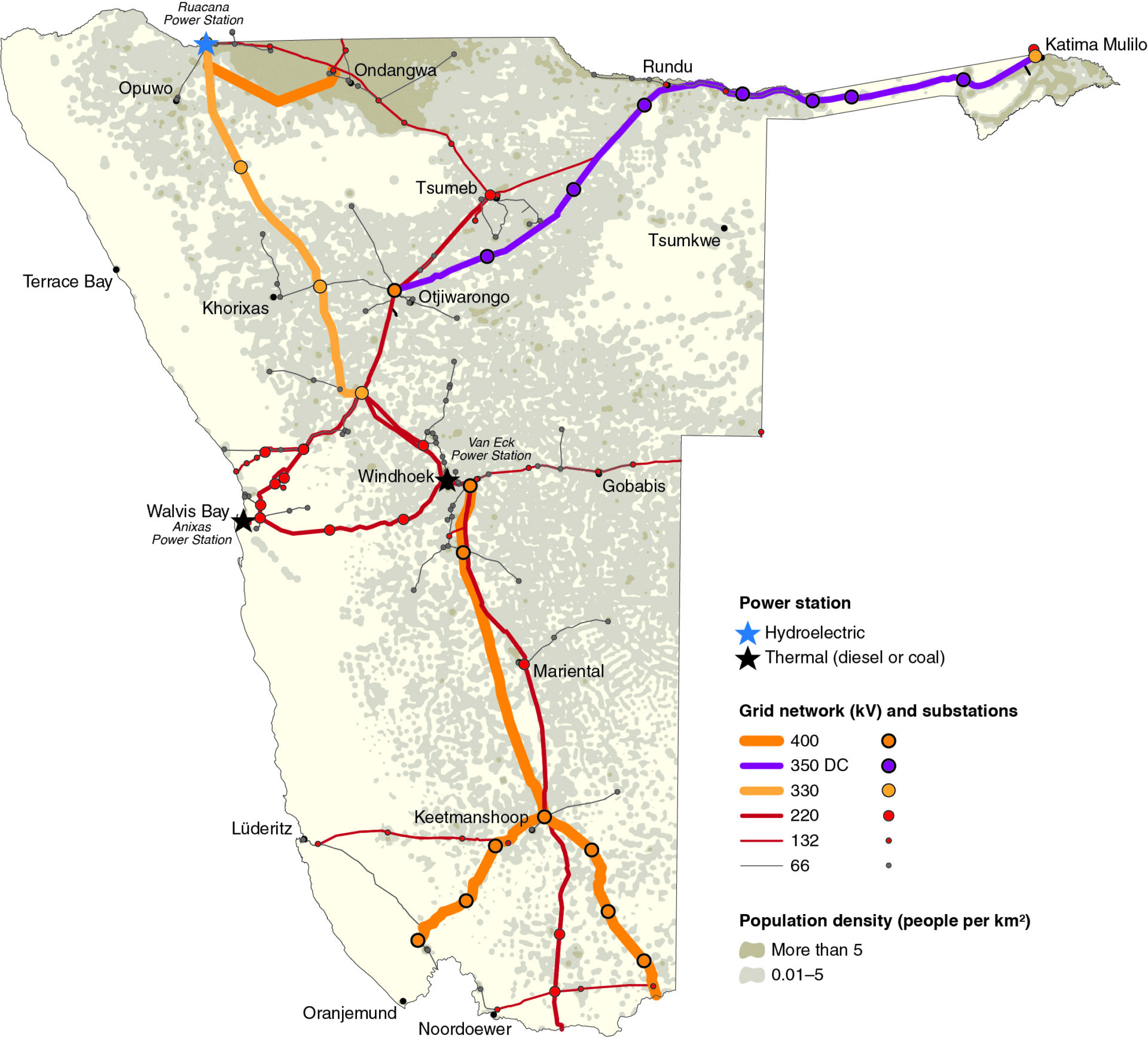
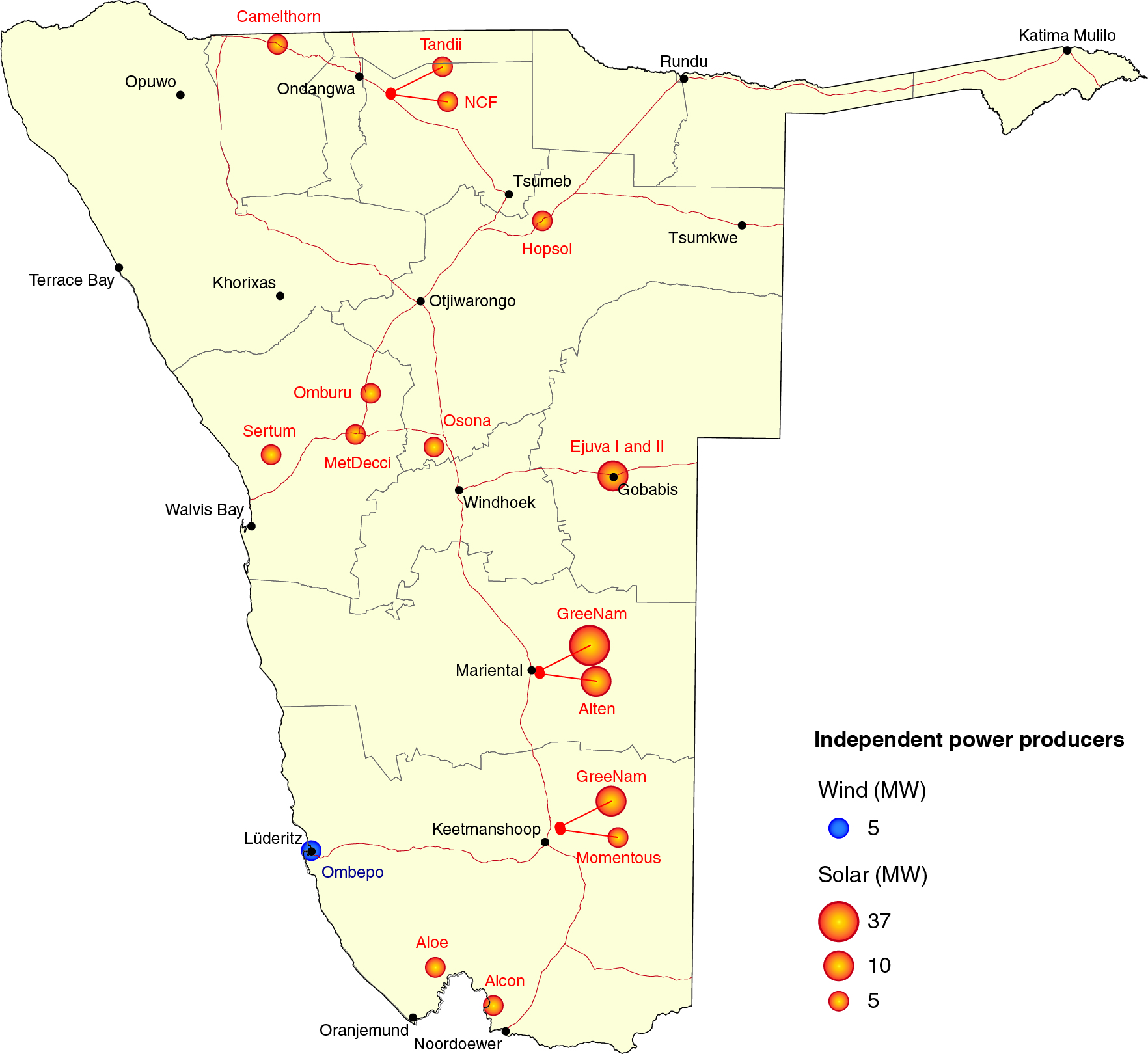
Historically, Namibia has depended on importing electricity from South Africa and the Southern African Power Pool (SAPP) given domestic generating capacity has been limited to the Ruacana hydroelectric power station in the north-west, the Van Eck coal-fired power station in Windhoek, and the Anixas and Paratus diesel power stations at Walvis Bay. Following the adoption of the Renewable Feed-In Tariff programme (REFIT) in 2015, these generating sources have been supplemented by 14 Independent Power Producers (IPPs) all but one of which are based on solar PV with one (in Lüderitz) based on wind. However, despite these additions, Namibia remains highly dependent on imported electricity from South Africa, Zambia, Zimbabwe, countries which themselves are facing shortages of generating capacity.
Ministry of Industrialisation, Mines and Energy and Other Public Agencies
The Ministry of Industrialisation, Mines and Energy is the key policy-making institution for the industry headed by the Minister of Industrialisation, Mines and Energy, since March 2025 the Right Honourable Natangwe Iithete. Electricity is the responsibility of the Electricity and Renewable Energy Divisions of the Directorate of Energy. Policy is guided by the National Integrated Resource Plan, Renewable Energy Policy and National Energy and Renewable Energy Policies published in 2017. The sector is regulated by the Electricity Control Board (ECB), a public enterprise responsible for licencing, tariff setting, and regulation. Government is currently drafting new legislation that will see the ECB transition to become a unified Namibia Energy Regulatory Authority (NERA). National Regional Electricity Distributors – the Northern RED (NORED), the Central Northern RED (CENORED), and the Erongo RED – distribute electricity to customers in key parts of the country. The envisaged Southern RED and Central RED have not yet been established. The Namibia Power Corporation (NamPower) is a fully state-owned commercial public enterprise responsible for generation, transmission and distribution of electricity and has historically been Namibia’s state-owned electricity monopoly. NamPower is one of only three public enterprises to receive a sovereign credit rating by Fitch and Moody’s. It publishes a very informative Annual Report. Under Namibia’s Modified Single Buyer (MSB) policy, large electricity consumers can purchase up to 30% of their requirements from the grid from suppliers other than NamPower.
Private Sector
Namibia’s first IPP was inaugurated in 2015 when InnoSun Energy opened its first 4.5MW solar PV Omburu power plant south of Omaruru. InnoSun is part of France’s InnoVent and invested in Omburu alongside a Namibian shareholder, Black Diamond Investment. This was followed by a string of other IPPs based mainly on solar PV. NamPower plans to add to these with four projects of its own: the N$1.2 billion 50MW Anixas II Diesel/HFO which was due for completion by the end of 2023, the €20 million 58MW million Omburu Battery Energy Storage System by the end of 2024, the N$1.4 billion 50MW Lüderitz wind park IPP by July 2025 with a 25-year PPA with China’s CERIM BOO, the N$1.6 billion 40MW Otjikoto biomass by end of 2025, and the N$300 million 20MW Khan solar PV IPP by Q2 2024 with ANIREP as the lead developer. The long-considered Kudu gas-to-power project, now majority owned by Norway’s BW Energy, may also deliver 475MW of additional domestic generating capacity. Namibia’s push to become a leader in green hydrogen involves significant investments in renewable energy which have the potential to add significantly to domestic electricity supply.
Regulators
- Electricity Control Board
- The Electricity Control Board (ECB) was established by the Electricity Act (Act No.4 of 2007) and regulates the awarding of licences for the production, transmission and distribution of electricity and also the electricity tariffs that may be charged. Mr Robert Kahimise was appointed CEO from 1 April 2023.Read more about Electricity Control Board
Public enterprises
- Namibia Power Corporation
- Namibia Power Corporation (“NamPower”) is a company established as a (Pty) Limited company on 1 July 1996 with the Government as sole shareholder and classified as a commercial public enterprise. Under the Electricity Act (Act No.4 of 2007) NamPower’s mandate is “to generate, transmit, distribute, supply and to trade in electricity which includes the importing and exporting of electricity, to fulfil its role in the changing regulatory and market environment”. NamPower is regulated by the Electricity Control Board (ECB). NamPower’s financial year runs from 1 July. NamPower is rated by Fitch Ratings. NamPower’s MD is Mr Kahenge Haulofu who was appointed on 23 July 2015.Read more about Namibia Power Corporation
Companies
In collaboration with Robin Sherbourne.